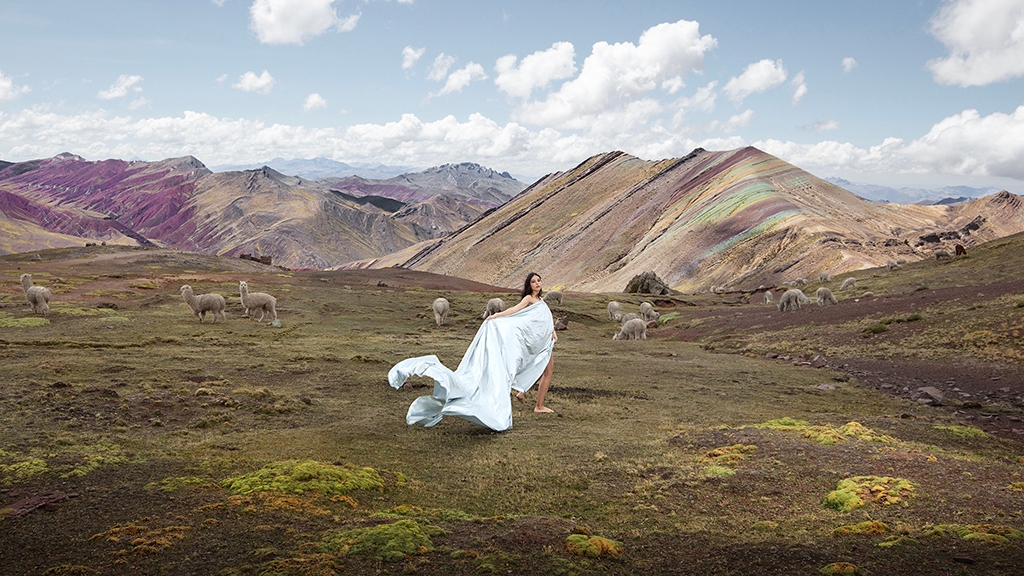
Palcoyo, Peru - 2024
Learn more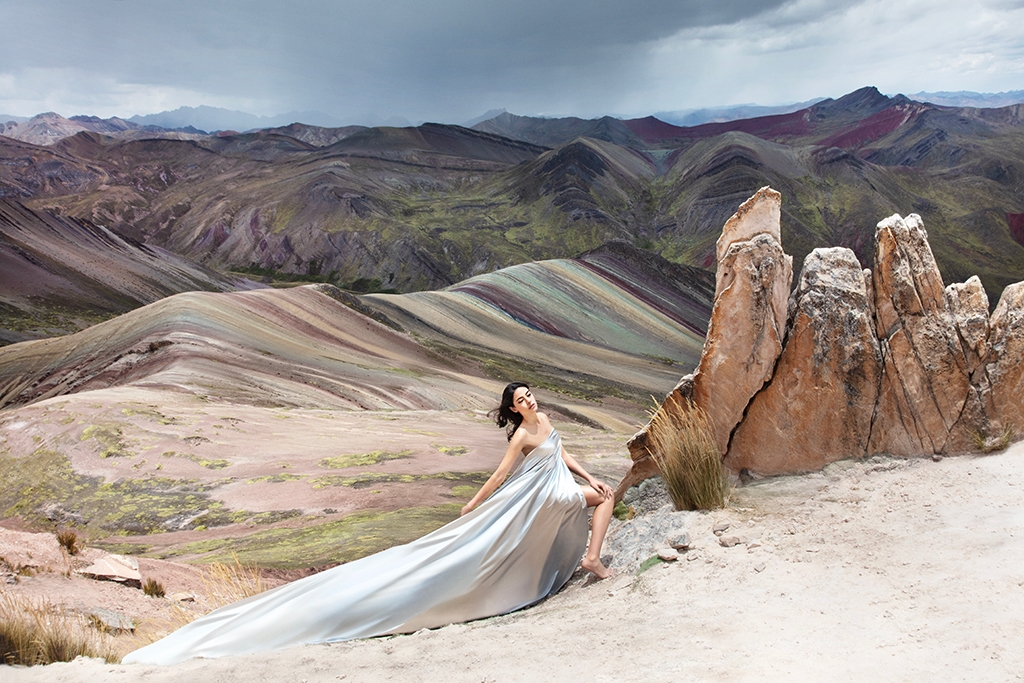
Palcoyo, Peru - 2024
Learn more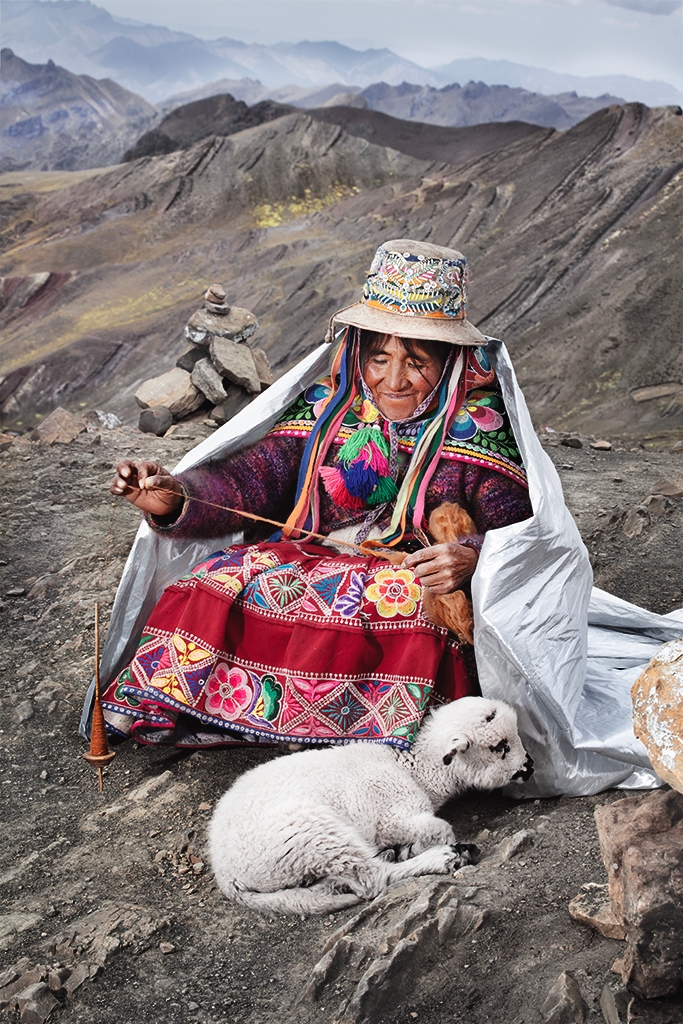
Palcoyo, Peru - 2024
Learn more
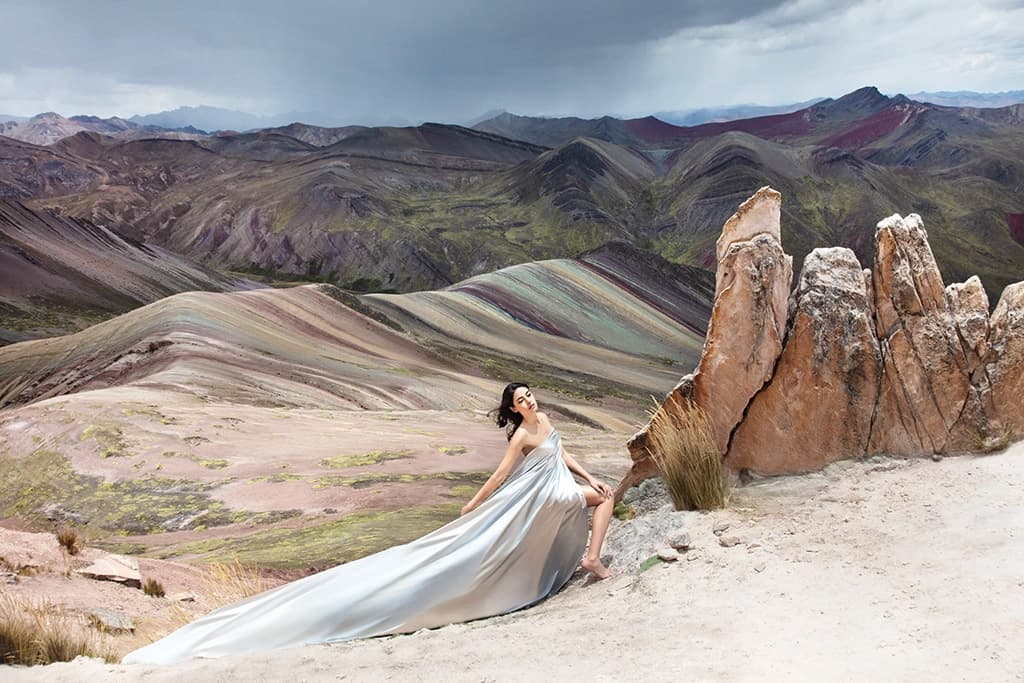
With this new collection, Isabelle further deepens this exploration of meaning. The veil, already present in her previous works, establishes itself here as a true emblem.
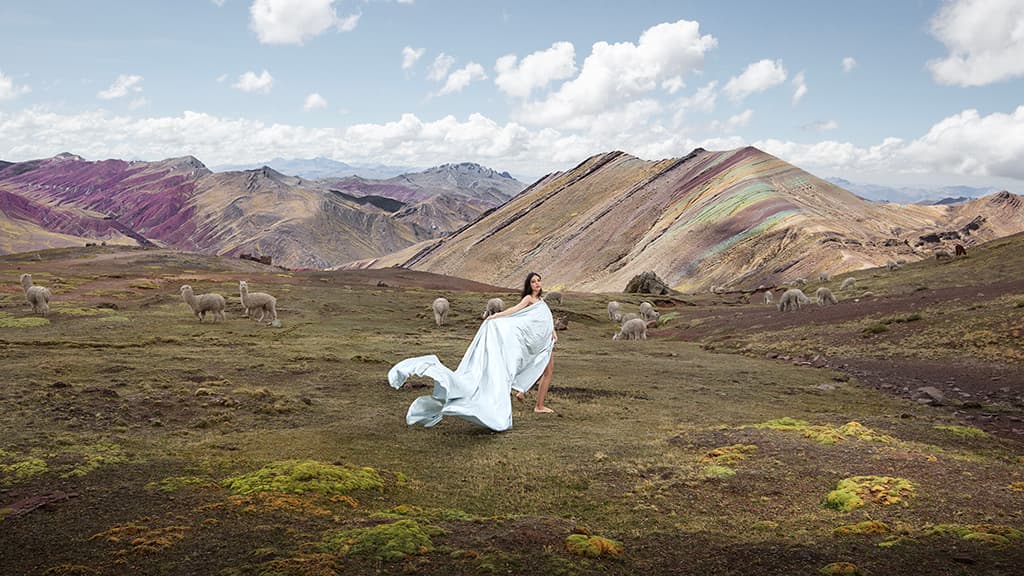
In the photographs of Isabelle Binder-Lindbergh, clouds are never mere background elements. They shape a suspended universe, a shifting territory where the imagination loses itself. Baudelaire called them “marvelous constructions of the intangible,” while Proust saw them as fleeting forms seducing the mind with their constant metamorphoses. For Isabelle, they embody the subtle dialogue between humanity and immensity, a visual echo of her silver veil, which threads through her images as a living metaphor. It follows the whims of the wind, bending, unfolding, alternately becoming a cozy cocoon, a fluid extension, or a striking contrast. It is not merely an accessory but a poetic presence that connects each woman photographed, the landscapes they inhabit, and the emotions they convey. Between sky and earth, like a transitional object, the fabric becomes the incarnation of the organic interaction between the human sphere and a mysterious infinite, a quasi-divine beyond.
Far from sophisticated productions, Isabelle is now rooted in an artisanal and instinctive process. Her series, shot in Saint Barthélemy, the icy mountains of Iceland, and the peaks of Peru, reflect an approach that rejects ease. The wind becomes an unpredictable partner, light an exacting sculptor, and the locations, full-fledged actors. Isabelle does not demand perfection from her models; on the contrary, she seeks sincerity in their awkwardness, their hesitations, and their way of letting themselves be guided by the elements to find their place in the setting, inhabiting it as if it were their universe.
“I choose places that are somewhat perilous and difficult to access, where obtaining a photograph becomes the fruit of effort and sacrifice that the model agrees to make. This shared journey creates a collective experience, a strength that accumulates throughout the process. The idea of other women joining me to immortalize these moments is very motivating and inspiring. Together, we live through significant moments that invite us to take a step back.”
Peru: The Sacred Breath of the Andes
Isabelle Binder-Lindbergh’s latest expedition takes us to 4,800 meters above sea level, in the Palcoyo mountains south of Cusco, which unfurl like celestial paintings composed of ochre, red, violet, and yellow meanders. These surreal landscapes seem imbued with mystical energy. In these vast spaces, emptied of vegetation, Isabelle photographs a matriarch in traditional dress, accompanied by her alpaca—a symbol of wealth and prosperity in Andean cultures. Driven by an icy breeze, the fabric becomes a protective veil, a force connecting this woman to her sacred lands. In these high altitudes, where air is scarce and every step is an effort, Isabelle captures serenity amidst struggle, beauty in simplicity. This moment is enriched by a second story: that of Beata, a Ukrainian traveler who found refuge in the Andes after fleeing war. Here, she experiences a rebirth. The fabric becomes a symbolic link between two worlds: past and future, suffering and peace.
Meditative Contemplation
Between Two Worlds is much more than a photographic exhibition: it is an initiatory journey, an ode to the interaction between humans and the elements. Isabelle Binder-Lindbergh immortalizes not only landscapes and bodies but also stories of resilience, communion, and transcendence. The silver veil, as fragile as it is powerful, threads through each composition as a universal metaphor. It is alternately protective, revealing, and narrative, connecting the models to the landscapes they temporarily inhabit. These images do not merely show; they invite one to feel. The cold of an Icelandic mountain, the sacred breath of the Andes, the aridity of Saint Barthélemy—these are sensations one perceives while contemplating these works.
Isabelle Binder-Lindbergh reminds us that within effort and unpredictability often lies the greatest poetry. Her photographs are moments stolen from the wind, the skies, and nature—fragments of stories where the unspeakable can be glimpsed.
